
Skip to content
Manufacturer of Industrial Blades, Machine Knives, and Custom CNC Tools in the United States, and Germany
Expansion hand left-hand machine reamers

Hand Reamers for Precision Manual Hole Finishing

EXPERIENCE THE BAUCOR DIFFERENCE.

DISCOVER PRECISION-ENGINEERED REAMERS THAT REDEFINE HOLE FINISHING.

Trusted by Engineers and Researchers at Fortune 500 Companies for Precision Manufacturing

Trusted manufacturing experience with leading global companies.

  • Lockheed Martin
  • Sumitomo Electric Interconnect Products
  • Saint-Gobain Performance Plastics Pampus GmbH
  • 3M
  • Frito-Lay
  • Parker Hannifin Corporation
  • Boston Scientific
  • General Dynamics – OTS Canada
  • ITW Food Equipment
  • Hemlock Semiconductor
  • Saft Batteries
  • KLA-Tencor
  • Land O'Lakes
  • Fastenal
  • Volvo Construction Equipment

Hand reamers are manual cutting tools that finish a drilled hole to an exact size and a smooth surface. A drill alone leaves a hole that is slightly oversize, rough and not perfectly round. A hand reamer removes a very small amount of material and produces a hole accurate to an H7 tolerance or better, ready for a dowel pin, bushing or shaft.

Baucor manufactures hand reamers in HSS, cobalt HSS and carbide, with straight or spiral flutes, in metric and inch sizes. We also make custom hand reamers to your diameter, tolerance and length.

What is a hand reamer used for?
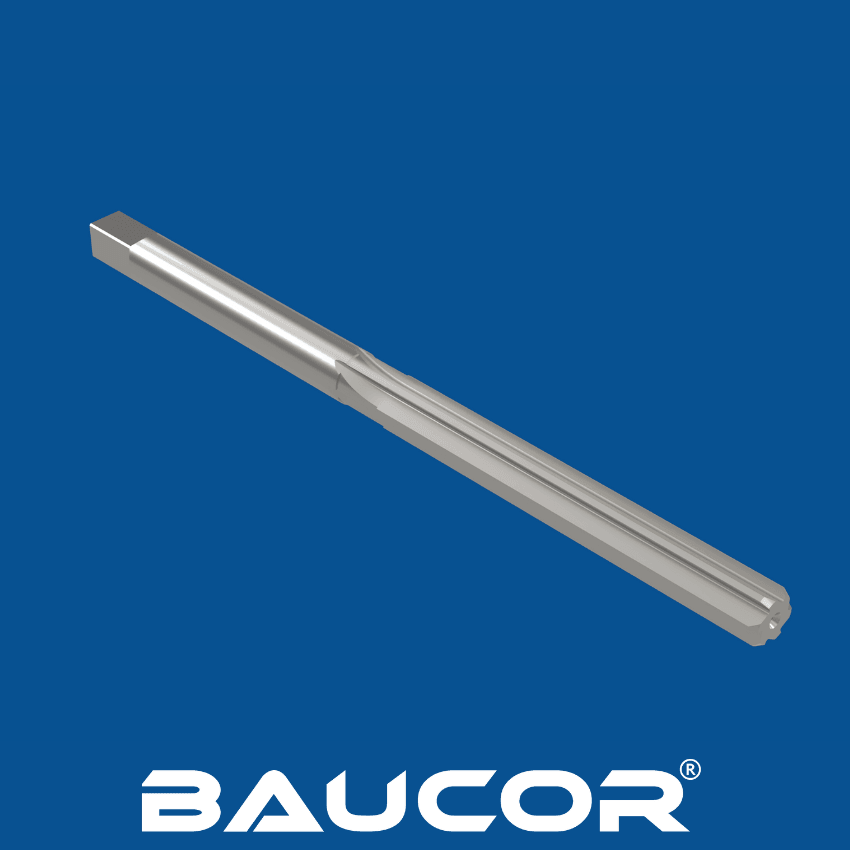
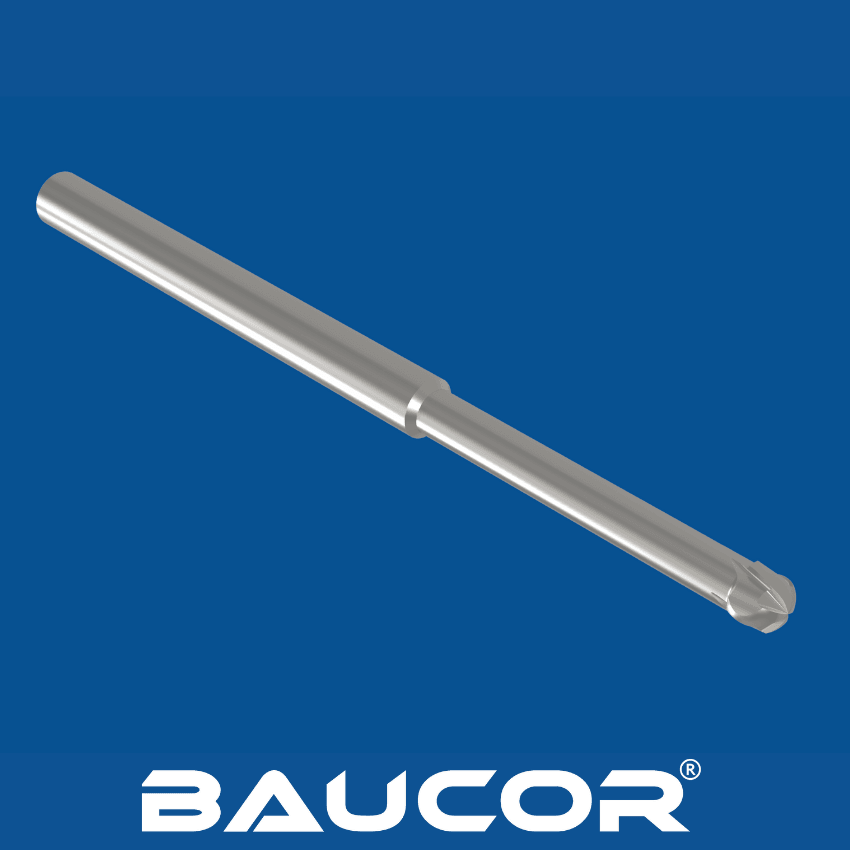
Baucor straight flute hand reamer

Use a hand reamer when a hole must be precise but a machine isn't practical: in assembly, maintenance and repair, on large parts that can't go on a machine, or for a small number of holes.

Typical jobExample
Fitting dowel and taper pinsAligning machine parts, fixtures and dies
Sizing holes for bushings and bearingsPress fits and slip fits in repair work
Correcting holes in assembliesLine-reaming holes in parts already bolted together
Finishing holes in large or fixed partsFrames, castings and housings that can't be moved to a machine
Toolroom and maintenance workOne-off holes, prototypes, worn holes

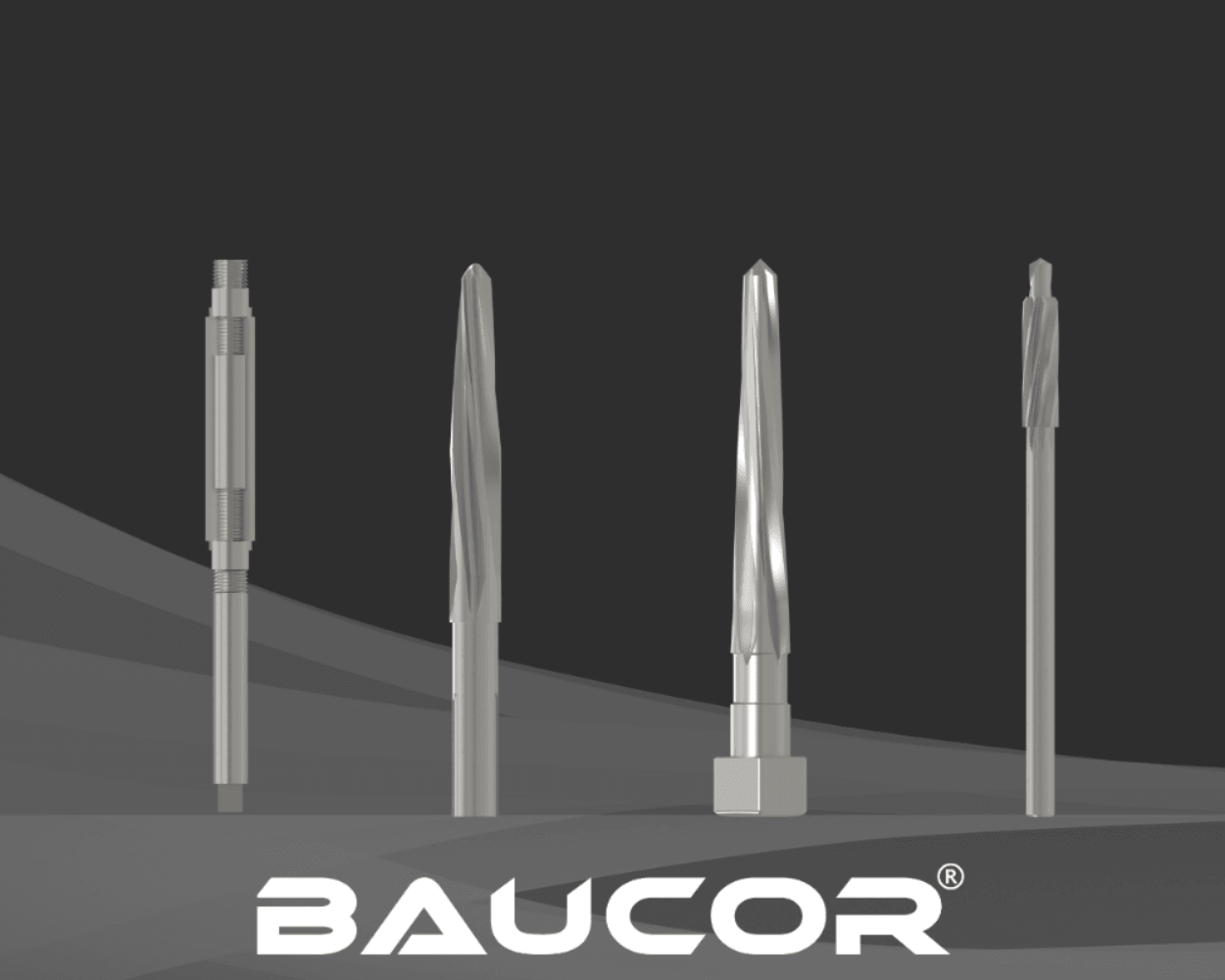
Anatomy of a hand reamer

PartWhat it does
Square driveFits a tap wrench, so the reamer can be turned by hand with even pressure
ShankPlain section between the drive and the flutes; the diameter is usually slightly under the cutting size
Taper lead (starting taper)A long, gentle taper at the front, typically over about a quarter of the flute length. It centers the reamer in the hole and spreads the cut over many teeth
FlutesStraight or spiral grooves that form the cutting edges and carry chips away
Cutting edges / marginsRemove a thin layer of material and burnish the hole wall; many hand reamers use uneven tooth spacing to reduce chatter

The long taper lead is what makes a hand reamer self-centering.

Hand reamer vs machine reamer

Hand reamerMachine (chucking) reamer
Driven byTap wrench, by handDrill press, lathe, mill or CNC
Shank endSquare driveStraight or Morse taper shank
Front of the toolLong taper leadShort 45° chamfer
Material removedVery littleMore
SpeedSlow, controlledMachine speed and feed
Best forAssembly, repair, few holes, large partsProduction, many identical holes

Never use a hand reamer in a power drill. The long taper and square drive are not designed for machine speeds; the reamer will chatter, cut oversize and can break. For machine reaming, use machine reamers or chucking reamers.

Straight or spiral flute hand reamer?

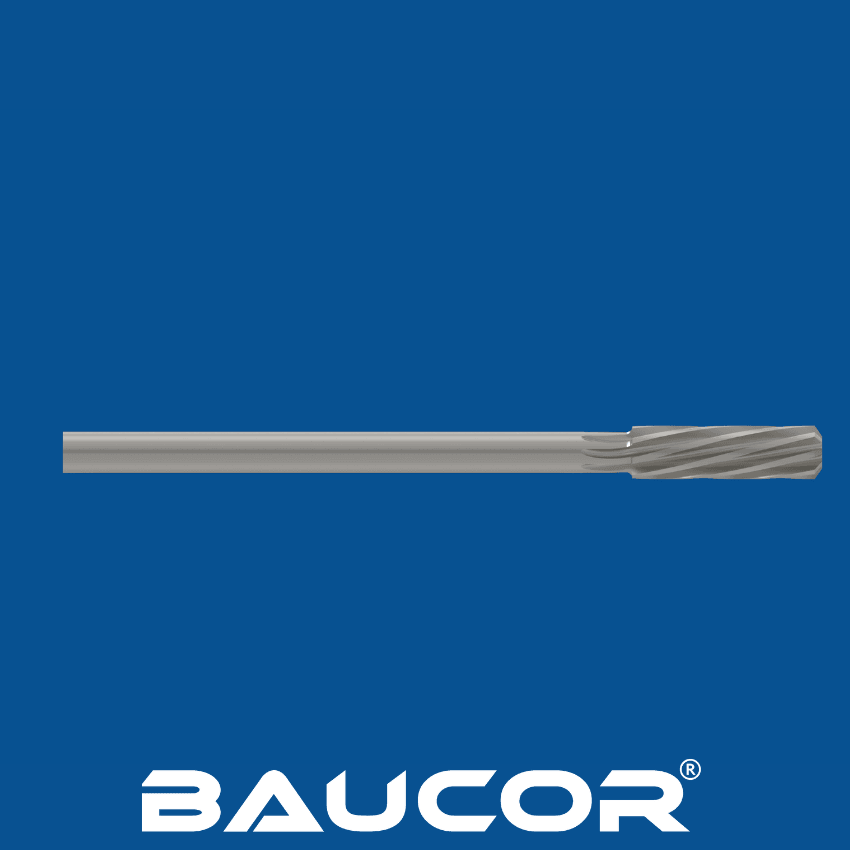
Baucor left-hand spiral flute hand reamer
Straight fluteLeft-hand spiral flute
Best forGeneral work, blind holes, cast iron, brassHoles with keyways, slots or cross-holes (interrupted cuts); through holes
Chip flowChips stay in the flutesPushes chips forward, ahead of the reamer
Cutting behaviorSimple, easy to controlSmoother cut; the left-hand spiral stops the reamer from screwing itself into the hole
PriceLowerSlightly higher

Rule of thumb: straight flute for blind holes, spiral flute for interrupted cuts. See also straight flute reamers and left-hand spiral reamers.

Design Your Own Reamer

Design Your Own Reamer

Fill out the form in a few steps for custom manufacturing solutions tailored to your exact needs!

Start Designing

How to use a hand reamer: step by step

Reaming a drilled hole to final size
  1. Drill the hole undersize. Use the stock allowance table below.
  2. Deburr the hole entry so the taper lead starts cleanly.
  3. Fit the reamer in a tap wrench and place it square to the hole. Check with a square for the first turns.
  4. Apply cutting fluid (steel and stainless). Cast iron and brass are usually reamed dry.
  5. Turn clockwise only, slowly and evenly, with light downward pressure. Let the taper lead guide the tool.
  6. Never turn backwards, not even to remove the reamer. Turning in reverse dulls the cutting edges and scratches the hole.
  7. Remove the reamer by continuing to turn clockwise while pulling it out, or push it through a through-hole.
  8. Clean and check the hole with a plug gauge or the mating part.

Stock allowance: how much undersize to drill

Reamer diameterMaterial to leave for hand reaming (on diameter)Example drill size
Up to 6 mm0.1 mm (0.004 in)6 mm reamer → 5.9 mm drill
6 – 12 mm0.1 – 0.2 mm (0.004 – 0.008 in)10 mm reamer → 9.8 mm drill
12 – 25 mm0.2 – 0.3 mm (0.008 – 0.012 in)20 mm reamer → 19.75 mm drill
Over 25 mm0.3 mm (0.012 in)30 mm reamer → 29.7 mm drill

These are typical values for hand reaming. Leave less in hard materials and more in soft, gummy ones. Too little material makes the reamer rub instead of cut; too much overloads it and the hole ends up oversize or rough.

Troubleshooting: common hand reaming problems

ProblemLikely causeFix
Hole is oversizeReamer not square to the hole; too much stock; worn or damaged reamerStart square; reduce allowance; check reamer diameter
Chatter marksUneven pressure; too little stock; dull edgesTurn slowly and evenly; leave the correct allowance; resharpen or replace
Rough finishNo cutting fluid; chips packed in flutes; turning backwardsUse fluid; clear chips; turn clockwise only
Reamer binds or sticksToo much stock; wrong flute type for the holeReduce allowance; use a spiral flute for interrupted holes
Hole tapered or bell-mouthedReamer not pushed deep enough; side pressureReam the full length; keep the wrench level

GET A QUOTE

Materials and coatings

MaterialPropertiesBest for
HSS (high-speed steel)Tough, easy to resharpen, good valueSteel, aluminum, brass, general workshop use
HSS-Co (cobalt, e.g. M35)Harder and more heat resistant than HSSStainless steel, tougher alloys
CarbideVery hard and wear resistant, but brittleAbrasive materials, cast iron, long tool life; needs careful, steady hand use
CoatingBenefitTypical use
Uncoated / brightSharpest edge, lowest costAluminum, brass, general use
TiN (titanium nitride)Harder surface, less frictionGeneral steel
TiCN (titanium carbonitride)Higher wear resistanceHarder steels, abrasive materials
TiAlN / AlTiNHeat resistantStainless steel and tough alloys

For carbide tools in depth, read our carbide reamers guide.

Hand reamer options and custom hand reamers

SpecificationBaucor range
Metric diameters1 mm – 40 mm standard (0.5 mm steps); larger and intermediate sizes on request
Inch diameters1/16" – 1-1/2" (fractional, letter and number sizes); larger on request
ToleranceH7 standard; other tolerance classes and special sizes on request
Flute typesStraight, left-hand spiral
MaterialsHSS, HSS-Co, carbide
CoatingsUncoated, TiN, TiCN, TiAlN
StandardsDIN 206 (metric hand reamers) / ASME B94.2 (inch)
Custom optionsSpecial diameters, lengths, step or pilot features, flute count, coatings

Need a non-standard size? Design your own reamer with our online form or get a quote. Our reamer design guide explains the dimensions to specify.

Frequently asked questions

What is a hand reamer?

A hand reamer is a manual cutting tool, turned with a tap wrench, that finishes a pre-drilled hole to an exact diameter and a smooth surface. It has a square drive and a long taper lead that centers it in the hole.

What size drill should I use before a hand reamer?

Drill slightly undersize: about 0.1 mm smaller for reamers up to 6 mm, 0.1–0.2 mm for 6–12 mm, and 0.2–0.3 mm for 12–25 mm. For example, drill 9.8 mm for a 10 mm hand reamer.

Can I use a hand reamer in a drill?

No. Hand reamers are designed for slow, manual turning. In a power drill they chatter, cut oversize and can break. Use a machine or chucking reamer instead.

What is the difference between a hand reamer and a machine reamer?

A hand reamer has a square drive and a long taper lead for manual use. A machine reamer has a straight or Morse taper shank and a short chamfer, and runs in a drill press, lathe or CNC machine.

Should I choose a straight or spiral flute hand reamer?

Choose straight flutes for general work and blind holes. Choose a left-hand spiral flute for holes with keyways or cross-holes, because it cuts smoothly over the gaps and won't screw itself into the hole.

Why should you never turn a reamer backwards?

Turning backwards drags chips across the cutting edges. This dulls the reamer and scratches the hole wall. Always keep turning clockwise, also while removing it.

What tolerance does a hand reamer produce?

Standard hand reamers are made to produce H7 holes, a common fit for dowel pins and bearings. Baucor can make hand reamers for other tolerance classes on request.

Why Baucor hand reamers

  • Manufactured to H7 tolerance with ground cutting edges.
  • Standard sizes and custom hand reamers from one supplier.
  • Engineering support from Baucor's tooling team in Irvine, CA and Mannheim, Germany.

UNMATCHED ENGINEERING SUPPORT

Engineering support services

Engineering Expertise, Every Step of the Way

Baucor offers custom manufacturing and engineering solutions tailored to your specific needs, across various industries.

Design for manufacturability DFM

Optimize Your Design for Production

Baucor's engineers can review your design and provide feedback to improve manufacturability, cost effectiveness, and efficiency.

Prototype and production solutions

Your Solution, Your Scale

Whether you need a single prototype or full-scale production, Baucor''s engineers are ready to collaborate with you. Contact us to discuss how we can bring your concept to life.

Custom engineering solutions

Tailored Solutions for Baucor Customers

Baucor specializes in providing unique manufacturing and engineering solutions designed to meet the specific needs of each client. Our expertise covers a wide range of industries and applications.